
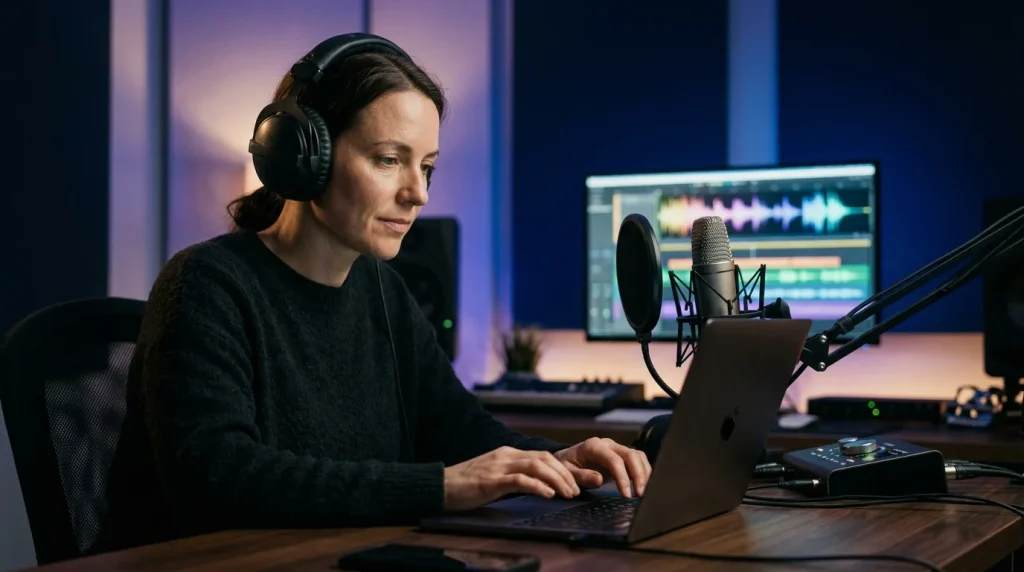
A realistic AI voiceover can help you produce YouTube videos, tutorials, online lessons, podcasts, and social media content without recording your own voice. The challenge is finding a free AI voice generator that sounds natural, handles your script well, and gives you enough audio to finish your project.
Some tools focus on expressive voices, while others combine text-to-speech with a video editor. Their free plans also differ: a tool might offer a monthly character allowance, free voiceovers inside an editor, or a limited selection of voices.
This guide compares useful options, explains how to create a natural-sounding voiceover, and covers the licensing details you should check before using AI-generated audio in monetized content.
Quick answer: Which free AI voice generator should you choose?
- For natural-sounding narration: Start with ElevenLabs. Its free plan currently includes 10,000 credits per month for text-to-speech and other features, but commercial usage rights are not included in the free tier.
ElevenLabs+1
- For voiceovers while editing videos: Try Microsoft Clipchamp, whose text-to-speech feature is described as free for Clipchamp video editor users. Text to speech for video+1
- For a browser-based voiceover workflow: Consider CapCut, which offers text-to-speech with voice and language options. Check the availability of individual features in your region and account. CapCut TTS+1
The best option depends on what you are making. If you only need a short narration, a free allowance may be enough. If you publish videos regularly or use audio commercially, check the limits and license before committing to a tool.
What is an AI voice generator?
An AI voice generator converts written text into spoken audio. This technology is commonly called text-to-speech (TTS).
You enter a script, select a voice, and generate an audio file or voiceover track. Depending on the tool, you may be able to adjust the speaking pace, pitch, language, accent, or emotional style.
Modern realistic AI voices can sound conversational, but the result still depends on the script, voice model, pronunciation, and settings. A long paragraph with complicated wording may sound less natural than the same information rewritten into shorter, spoken sentences.
AI voice generators are useful for:
- YouTube tutorials and faceless videos.
- Online courses and educational explainers.
- Product demonstrations and presentations.
- Short-form social media videos.
- Narration for blogs and digital learning materials.
- Draft voiceovers when you do not have access to a microphone or recording space.
They can save recording time, but you should still listen to the final audio before publishing.
Best free AI voice generators for realistic voiceovers
These tools are worth comparing because they approach voice generation differently. The free-plan details below are based on official product information available at the time of writing; limits and features can change.

1. ElevenLabs — for expressive narration
ElevenLabs is a strong starting point when the sound of the voice matters. Its text-to-speech tools offer natural-sounding narration and a choice of voices for different content styles. The service is suitable for scripts such as video explainers, stories, and educational narration.
ElevenLabs
Free plan: The official pricing page lists 10,000 credits per month on the free tier. Credit consumption depends on the feature used. The free plan does not include the commercial license offered on paid plans, so check the terms before using its output in monetized projects.
ElevenLabs
Best for: Creators who want to compare expressive voices before deciding whether to pay.

2. Microsoft Clipchamp — for video editing and voiceovers
Clipchamp combines text-to-speech with a video editor. You can select a language and voice, adjust pitch or pace, preview the narration, and place the generated audio directly on your editing timeline
Microsoft Support
Free plan: Microsoft describes its text-to-speech feature as free for Clipchamp video editor users. Character limits vary by language, and long scripts may need to be split into smaller sections.
Text to speech for video
Best for: YouTube tutorials, screen recordings, explainer videos, and creators who prefer to generate narration and edit video in one place.
Try Clipchamp’s AI voiceover generator

3. CapCut — for short videos and social content
CapCut offers text-to-speech tools with voice options in multiple languages. Depending on the workflow, you can enter a script, choose a voice, adjust settings, and add narration to a video project
CapCut TTS
Free plan: CapCut promotes its text-to-speech tool as free to try. Feature availability, export options, and account restrictions can vary, so confirm the options available in your own account before building a production workflow around them.
Best for: YouTube Shorts, Reels, TikTok videos, and creators who want to synchronize narration with visuals and captions.

4. Canva — for presentations and simple projects
Canva’s AI voice feature lets you enter a script, select a voice and language, generate narration, and add the audio to a design’s timeline. That makes it convenient if you’re already building a presentation, social video, or promotional graphic in Canva.
Canva Help Center
Free plan: Canva offers free voice generation with a selection of voices, but usage limits and available options apply. Its help documentation notes that free users may need to upgrade after reaching their AI usage limit.
Canva
Best for: Presentation narration, educational slides, simple marketing videos, and creators who want audio and visuals in one editor.
Try Canva’s AI voice generator
Free AI voice generator comparison
| Tool | Main strength | Free access to check | Ideal use |
|---|---|---|---|
| ElevenLabs | Expressive, realistic narration | Monthly credit limit; commercial rights differ by plan | Narration and storytelling |
| Clipchamp | Voiceover inside a video editor | Free TTS; language-specific text limits | Tutorials and explainers |
| CapCut | Voiceover with video editing | Free-to-try tools; check account availability | Short-form content |
| Canva | Voiceovers inside designs | Free voices with AI usage limits | Presentations and social videos |
My practical recommendation: Start with Clipchamp if you mainly need narration for videos and want a straightforward editing workflow. Try ElevenLabs if voice quality and expressive delivery are your main priorities, and carefully check the license if you plan to monetize your content.
No single tool is guaranteed to sound best for every script. Listen to the same short sample in two or three tools before choosing.
How to create a realistic AI voiceover step by step
You don’t need a complicated audio setup. The following workflow works with most text-to-speech tools.
Step 1: Prepare your script for spoken language
A script written for reading may not sound natural when spoken aloud. Long sentences, complex punctuation, and repeated technical terms can make a voiceover difficult to follow.
For example, instead of writing:
“AI-based text-to-speech technology enables content creators to efficiently generate high-quality narration for multiple digital content formats.”
Try:
“AI voice tools turn your written script into spoken audio. You can use that audio in YouTube videos, tutorials, and presentations.”
The second version is easier to follow when heard rather than read.
Step 2: Choose a voice that matches your content
Think about the person you want your narration to sound like. A calm, measured voice may work well for an educational explainer. A warmer, more energetic voice may suit a product demonstration or short video.
Listen for:
- Clear pronunciation, especially of names and technical terms.
- A natural speaking pace.
- Pauses that make sentences easy to understand.
- An accent appropriate for your audience.
- A tone that fits the subject without sounding exaggerated.
Don’t select a voice based on the preview alone. Test it with a paragraph from your actual script.
Step 3: Generate a short sample first
Before converting a full script, generate around 100–200 words. This lets you check pronunciation, pacing, and tone without using your entire free allowance.
If the tool allows voice or style instructions, start with a prompt like this:
Read this script in a natural, conversational American English voice. Use a friendly, confident tone suitable for a beginner technology tutorial. Keep the pace moderate, pronounce technical terms clearly, and use brief pauses between ideas. Avoid exaggerated excitement, overly dramatic emotion, and a robotic delivery. Preserve the original meaning of every sentence.
Not every text-to-speech tool accepts natural-language voice instructions. If yours doesn’t, choose the closest available voice preset and adjust the speed or pitch settings instead.
Step 4: Correct pronunciation and pacing
Listen carefully to the generated sample. Pay special attention to:
- Acronyms such as AI, SEO, and URL.
- Brand names and software terminology.
- Numbers, dates, currency, and abbreviations.
- Sentences that run together without a pause.
- Words that sound different from how you intended them.
If a word is mispronounced, try rewriting the sentence, spelling out an abbreviation, or using a pronunciation feature if the tool supports it. Clipchamp’s guidance, for example, suggests spelling a word phonetically or writing numbers in words when necessary.
Text to speech for video
Step 5: Generate and review the complete voiceover
Once the sample sounds right, generate the remaining script. For a long video, split the script into logical sections if the tool has text limits.
Listen to the complete audio while following the script. Check for missing words, awkward pauses, inconsistent pronunciation, and abrupt transitions. If you are adding background music, keep it low enough that the narration remains clear.
Step 6: Export the audio and sync it with your video
Export the narration in the format available from your chosen tool, then import it into your video editor if it isn’t already on the timeline. Align the narration with the relevant footage, add captions if useful, and check the beginning and end for unwanted silence.
Keep a copy of the final script and generated audio. If you need to revise one sentence later, this can make the editing process easier.
How to make AI voices sound more human
Choosing a good voice is only part of the process. The way you write and format your script can make a noticeable difference.
Write for the ear, not the page
People usually speak in shorter, more direct sentences than they write in formal documents. Use everyday language and explain one idea at a time.
For a tutorial, you might write:
“First, open your video editor. Next, paste your script into the text-to-speech box. Choose a voice and preview the result before generating the full narration.”
This gives the listener a clear sequence to follow.
Use punctuation to guide delivery
Commas, full stops, and paragraph breaks help organize spoken content. Some tools interpret punctuation as cues for pauses, although the exact behavior varies.
Don’t add dozens of commas or ellipses to force a particular sound. Rewrite the sentence naturally first, then use the tool’s pacing controls if available.
Avoid overusing emotional styles
A dramatic voice may suit a fictional story, but it can feel distracting in a software tutorial. For educational content, clear pronunciation and steady pacing are often more useful than exaggerated emotion.
Check difficult names and numbers
AI voices can stumble over uncommon names, product names, abbreviations, and figures. Read those parts carefully during the review, and rewrite them when necessary to improve pronunciation.
Keep background music subtle
Music can improve the atmosphere of a video, but it should not compete with speech. Lower the music volume during narration and listen through headphones or ordinary speakers before exporting.
Ready-to-use AI voice prompts for different projects
If your tool supports voice descriptions or style instructions, adapt one of these examples. If it only offers preset voices, use the descriptions as a guide for selecting the closest match.
1. YouTube tutorials and technology explainers
Goal: clear, friendly narration that beginners can follow.
“Speak in a clear, conversational American English voice. Sound knowledgeable and approachable, like a patient technology instructor explaining a new tool to a beginner. Use moderate pacing, precise pronunciation, and natural pauses between steps. Avoid sounding overly formal or excessively enthusiastic.”
2. Faceless YouTube documentaries
Goal: measured, engaging storytelling without artificial drama.
“Use a composed documentary narration style with a warm, steady voice. Build interest through deliberate pacing and well-placed pauses, while keeping the delivery believable and restrained. Pronounce names and dates carefully. Avoid exaggerated suspense or theatrical emphasis.”
3. Product demos and promotional videos
Goal: confident, polished delivery without sounding pushy.
“Use a polished, friendly commercial narration style. Speak clearly and confidently, with natural emphasis on the product’s practical benefits. Keep the pace lively but easy to understand. Avoid hard-sell language, excessive excitement, and unnatural pauses.”
4. Online lessons and educational presentations
Goal: calm, accessible instruction with consistent pacing.
“Use a calm, clear teaching voice. Explain each idea at a comfortable pace and leave short pauses between major points. Pronounce technical vocabulary carefully and keep the tone supportive and professional. Do not rush through lists or make every sentence sound equally emphatic.”
Free AI voice generators: important limitations to understand
A tool being free to try does not necessarily mean unlimited use or unrestricted commercial rights. Check these points before producing a large amount of audio.
Monthly limits and text length
Some tools limit usage through credits, characters, or the amount of text you can convert in one request. A character limit may apply to each generation, while a monthly allowance controls how much you can create overall.
For example, ElevenLabs lists 10,000 monthly credits on its free plan, while Canva’s voice feature has a per-conversion text limit and AI usage restrictions. These limits are not directly comparable because the tools calculate usage differently.
ElevenLabs
Commercial rights and YouTube monetization
If you plan to earn money from YouTube videos, advertisements, courses, or client projects, read the tool’s current license carefully. Some plans allow personal experimentation but reserve commercial-use rights for paid subscriptions.
ElevenLabs explicitly lists commercial licensing as a paid-plan feature. Other tools may have different terms, so check their policies rather than assuming that a downloadable audio file is automatically cleared for every use.
ElevenLabs
Using AI narration alone does not guarantee YouTube monetization. Your overall content must still meet YouTube’s monetization policies and other applicable requirements.
Voice cloning, consent, and impersonation
Voice cloning can imitate a particular person’s voice. Only clone or use a voice when you have the necessary permission, and don’t use synthetic audio to mislead people into believing someone said something they did not say.
If your content includes realistic synthetic depictions of real people or events, review YouTube’s disclosure rules and the relevant platform policies. Requirements depend on the content and how it is presented.
Privacy and uploaded scripts
Before uploading confidential client material, unreleased business information, or private recordings, review the service’s privacy and data-handling terms. Avoid submitting sensitive information when it is not necessary to generate the voiceover.
Common AI voiceover problems and how to fix them
| Problem | What to try |
|---|---|
| The voice sounds robotic | Test a different voice, simplify sentences, and adjust pacing if available. |
| Words are pronounced incorrectly | Rewrite the phrase, spell out abbreviations, or use pronunciation controls if supported. |
| The narration is too fast | Lower the speech rate and break long sentences into shorter ones. |
| The voice sounds too dramatic | Choose a neutral preset or reduce emotional emphasis. |
| A long script won’t generate | Split it into smaller sections within the tool’s character limits. |
| The audio doesn’t match the video | Align the audio track with the footage and review the timing from start to finish. |
| The voiceover is difficult to hear | Reduce background music and check the final mix on more than one device. |
| The tool blocks commercial use | Review the license and choose a plan or tool that grants the rights you need. |
A good final review is simple: listen to the whole voiceover once without looking at the script. If a sentence is confusing, a pause feels unnatural, or a pronunciation distracts you, fix that section before publishing.
Frequently asked questions
1. What is the best free AI voice generator?
It depends on your project. ElevenLabs is worth trying for expressive narration, Clipchamp for voiceovers within a video editor, CapCut for short-form content, and Canva for presentations and simple designs. Compare their current free limits and licensing terms before deciding.
2. Can I use a free AI voice generator for YouTube videos?
Yes, provided your chosen tool’s terms allow your intended use. If you plan to monetize videos, verify the commercial-use license for the specific plan you are using. Free access to voice generation does not automatically grant commercial rights.
3. Which AI voice generator sounds the most realistic?
Realism varies by voice, language, script, and delivery style. ElevenLabs emphasizes expressive, natural-sounding narration, but other tools may work better for particular voices or projects. Generate the same short sample in several tools and compare pronunciation, pacing, and tone.
4. Can I generate AI voiceovers without recording my own voice?
Yes. Text-to-speech tools convert a written script into audio without requiring you to record narration yourself. You still need to review the result and edit any pronunciation or timing issues.
5. Are free AI voice generators unlimited?
Usually, you should not assume they are. Some have monthly credits, character limits, restricted voice choices, or features available only on paid plans. Check the official pricing and usage pages before starting a long project.
6. Can AI voices speak in American English?
Yes. The tools covered here offer English voice options, and some provide choices for language or accent. Listen to the actual voice sample to check whether its pronunciation and delivery suit your intended audience.
7. Can I use AI-generated voices for commercial projects?
That depends on the tool, plan, and applicable terms. Review the commercial-use license and any restrictions on generated audio, voice cloning, or uploaded material before using it in advertising, paid courses, or monetized content.
8. How can I make AI narration sound less robotic?
Start with a script written for speaking, choose a suitable voice, and use natural punctuation. Generate a short sample, correct difficult pronunciations, adjust the pace if possible, and listen to the finished narration before publishing.
Conclusion
A good AI voiceover starts with a clear script and a voice that fits your content. For a straightforward video workflow, try Clipchamp or CapCut. If you want to explore more expressive narration, compare ElevenLabs, and consider Canva if you already create presentations or videos there.
Before settling on a tool, generate the same short script in two or three services. Compare the sound, review the free limits, and confirm that the license covers your intended use. That small test can help you choose a tool that fits both your creative needs and your budget.


